
Quick answer: Global warming in Antarctica is the warming of the Southern Ocean and progressive loss of the continent's ice sheet, which holds about 90% of Earth's ice. Since 1979, Antarctic ice loss has accelerated sixfold, from about 40 to over 250 billion tonnes a year — enough, if it continued, to eventually raise sea levels by up to 58 metres. Glaciologist, science communicator, educator, and explorer Dr. Ulyana Horodyskyj Peña explains how climate change is impacting the last continent.
Dr. Ulyana Horodyskyj Peña explains how global warming is impacting Antarctica.
The first thing most people notice about Antarctica is the silence. Not the complete absence of sound, as there is always wind, the distant calls of penguins, or the crack and groan of moving ice. But rather, a stillness that makes you feel very small in a very large world. Standing on the deck of a ship as icebergs drift past, or stepping onto sea ice that stretches to the horizon, it's easy to imagine Antarctica as timeless and unchanged. Yet one of the greatest lessons Antarctica teaches is that change is constant. Understanding global warming in Antarctica — what's driving it, how much ice has already been lost, and what it means for the rest of the planet — starts with the ice itself.
What is global warming in Antarctica?
As a glaciologist, I've spent years studying changes to snow and ice in some of the most remote places on Earth, from the Himalayas and Andes to the Arctic and Antarctica. The polar regions are often portrayed as distant wildernesses, disconnected from everyday life. In reality, they are deeply connected to all of us. What happens in Antarctica influences global sea levels, ocean circulation, ecosystems, and even weather patterns thousands of kilometres away. Today, scientists are observing the effects of global warming in Antarctica reshaping our understanding of the frozen continent and its role in Earth's climate system.


Why Antarctica is called Earth's air conditioner
Antarctica is often described as Earth's air conditioner, and for good reason. It is also, by a wide margin, the coldest continent on Earth — a fact that shapes everything from its ice physics to its wildlife (see our guide to how cold Antarctica really gets). The continent contains approximately 90 percent of the world's ice and more than 70 percent of its freshwater. If all of that ice were to melt, a process that in reality would take many centuries, it would raise global sea levels by nearly 58 metres (IPCC, 2021). While scientists do not expect anything close to that scenario in our lifetimes, even relatively small amounts of ice melting in Antarctica can have significant consequences for coastal communities around the world.
The scale of Antarctica
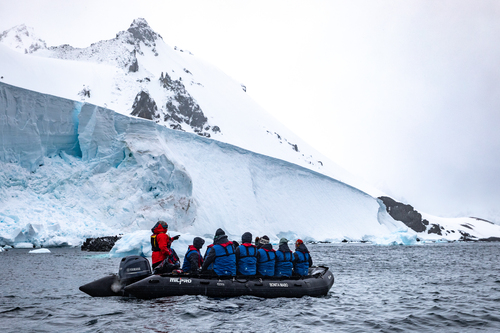
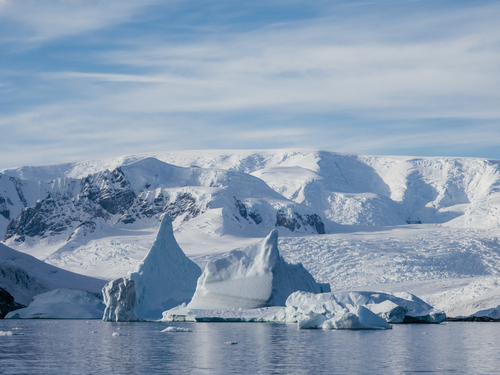
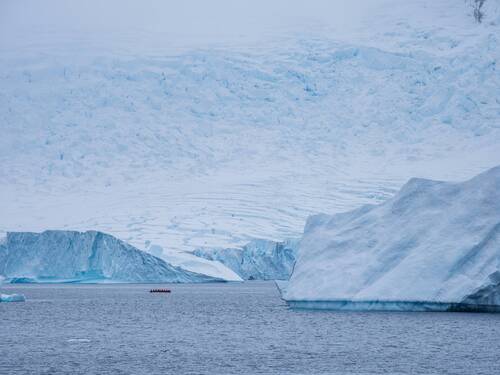
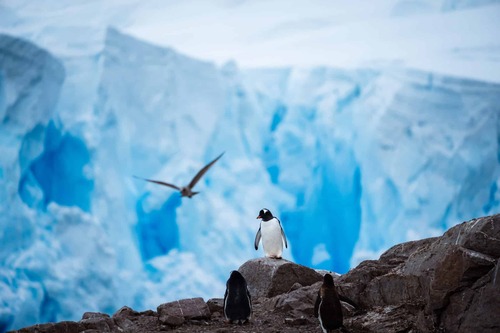
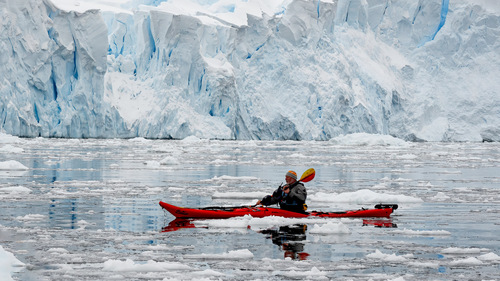
One of the most remarkable aspects of Antarctica is its sheer scale. Covering roughly 14 million square kilometres (5.4 million square miles), it is nearly twice the size of Australia and larger than the United States and Mexico combined. Much of the continent is hidden beneath an ice sheet averaging more than a mile (1.6 kilometres) thick. Standing before a glacier face hundreds of metres high, it's easy to feel as though this frozen world is too vast to be affected by human activity.

How global warming melts Antarctic ice from below
But science tells a different story. One of the most important discoveries of recent decades is that global warming in Antarctica is not simply about warmer air temperatures melting ice from above. In many places, the most significant effects are happening from below.
The Southern Ocean surrounding Antarctica acts as one of Earth's most important climate buffers. According to the Intergovernmental Panel on Climate Change (IPCC), the oceans have absorbed more than 90 percent of the excess heat trapped by greenhouse gas emissions since the 1970s (IPCC, 2021). Much of that heat eventually reaches waters around Antarctica, where it drives ice melting in Antarctica from below, thinning the ice shelves that fringe much of the coastline. Ice shelves are floating extensions of the ice sheet; they act like giant doorstops, slowing the movement of ice flowing from the continent into the ocean. When warmer water reaches their undersides, these shelves can thin and weaken, and without that support, ice behind them can accelerate towards the sea. You can read more about how these floating shelves form in our glaciers explainer with glaciologist Heidi Sevestre.
This process is particularly evident in West Antarctica, where glaciers such as Thwaites Glacier have become the focus of intense scientific study. Roughly the size of Florida, Thwaites has been losing ice rapidly as relatively warm ocean water reaches the glacier where it meets the sea. Scientists are closely monitoring the region because changes there could contribute significantly to future sea-level rise (Scambos et al., 2017). Long-term monitoring stations such as Halley VI, run by the British Antarctic Survey, are central to this environmental research, tracking exactly these kinds of changes across the continent.


How much ice has melted in Antarctica?
The scale of Antarctica can make global warming difficult to see with the naked eye. During expeditions, guests often ask me whether they are “seeing climate change.” The answer is more complicated than many expect. Unlike a shrinking mountain glacier where photographs taken decades apart can reveal dramatic retreat, Antarctica is vast and highly variable. Some regions are changing rapidly, like the Peninsula, while others show relatively little change over similar periods. Sea ice expands and contracts seasonally. Weather fluctuates. Snowfall varies from year to year. Yet when scientists combine decades of satellite observations, field measurements, and climate models, a clear picture emerges: Antarctica is losing ice overall, and the rate of ice melting in Antarctica has accelerated significantly in recent decades.
Antarctic ice loss by the numbers
A landmark study led by Eric Rignot and colleagues found that Antarctic ice loss increased from about 40 billion tonnes per year in the 1980s to more than 250 billion tonnes per year during the 2010s — more than a sixfold increase in under four decades (Rignot et al., 2019). That number is difficult to visualize. What matters is what it represents: more land-based ice entering the ocean and contributing to rising sea levels worldwide.

Record-low sea ice in 2023 and 2024
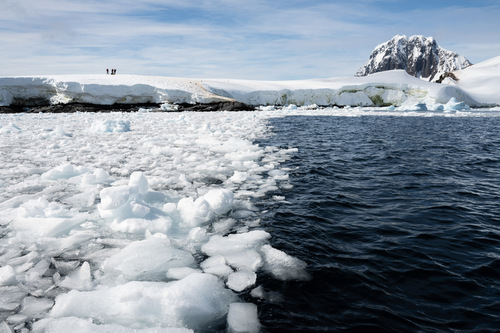
One of the most surprising developments in recent years has involved Antarctic sea ice. For decades, Antarctic sea ice behaved differently from Arctic sea ice, which has shown a clear long-term decline. Antarctic sea ice exhibited much greater year-to-year variability, leading some people to mistakenly conclude that Antarctica was somehow immune to global warming. Then came the record-low sea ice years of 2023 and 2024. In February 2023, Antarctic sea ice extent fell to approximately 1.79 million square kilometres, the lowest level observed since satellite monitoring began in 1979 (National Snow and Ice Data Center, 2023). Scientists described the event as extraordinary. While researchers are still working to fully understand the causes and long-term implications, the record lows serve as a reminder that climate systems do not always change gradually. Sometimes they surprise us.
How does global warming affect animals in Antarctica?
Krill: the foundation of the Southern Ocean food web
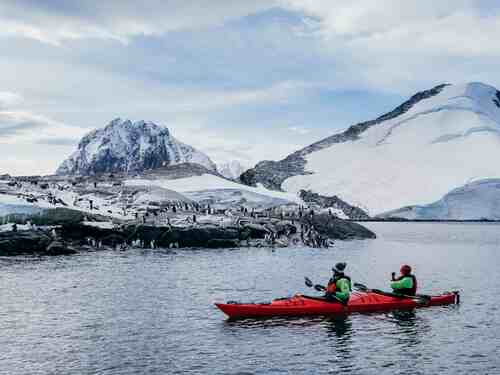
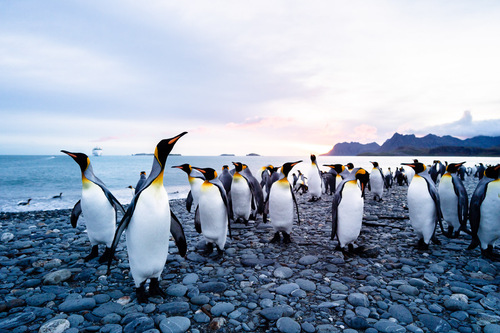
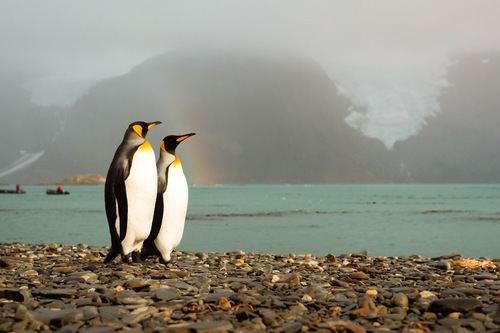
I've witnessed firsthand how closely life in Antarctica is tied to ice. Standing among bustling penguin colonies, watching whales surface alongside drifting sea ice, or observing seabirds wheel above glacier-carved coastlines, it becomes clear that ice is habitat. Global warming's effects on Antarctica extend well beyond the ice itself. Antarctic krill, small shrimp-like crustaceans, form the foundation of the Southern Ocean food web. Penguins, seals, whales, fish, and seabirds all depend directly or indirectly on krill. Because young krill rely on sea ice habitat during critical stages of their life cycle, ice melting in Antarctica can ripple throughout the ecosystem, from the smallest crustaceans to the largest whales (Atkinson et al., 2019).
Which Antarctic animals are most at risk?
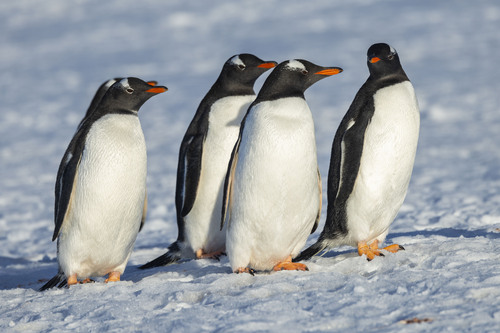
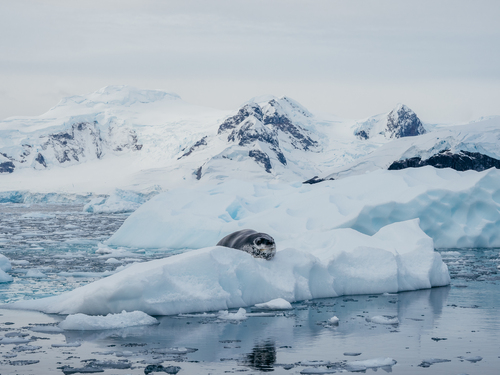
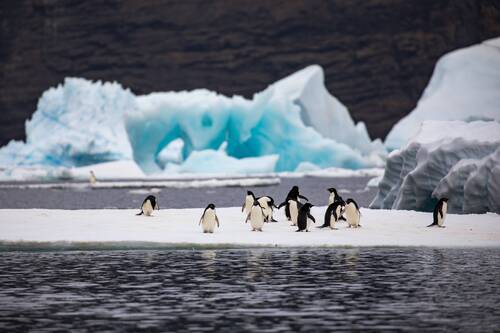
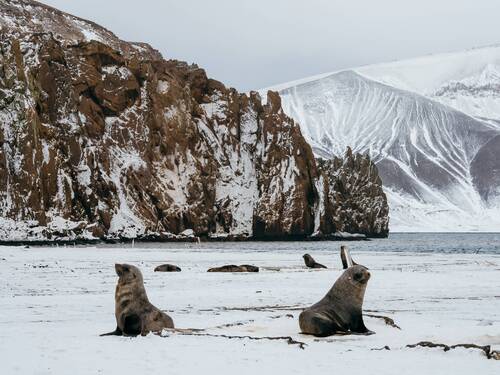
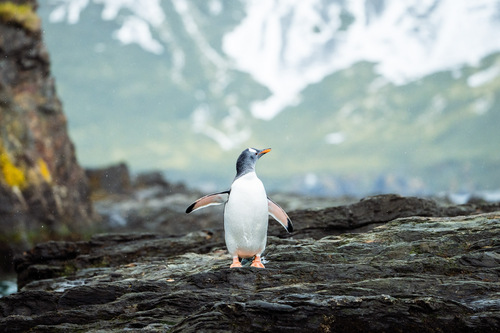
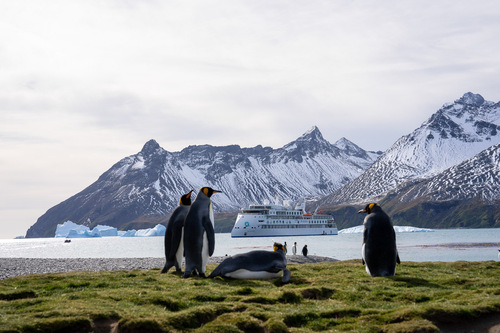
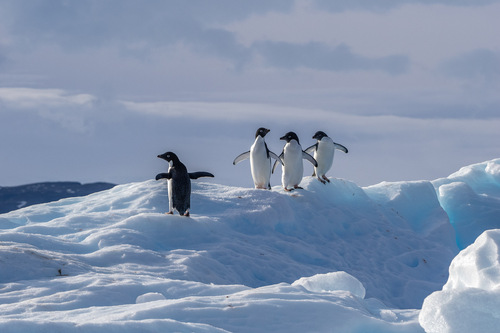
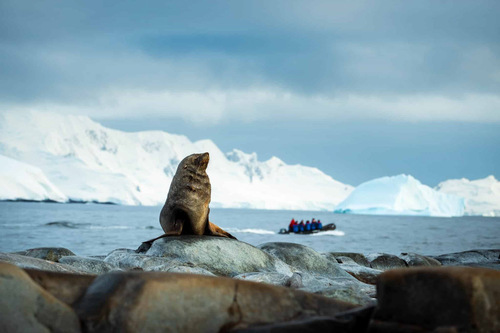
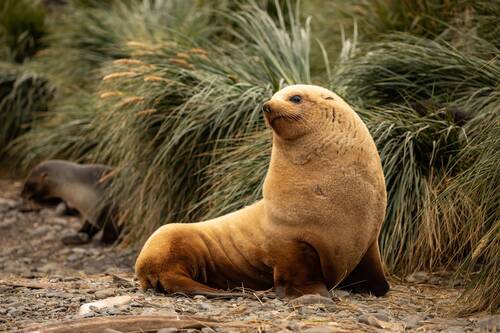
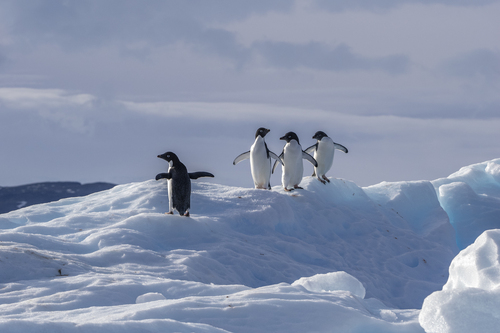
Guests regularly ask which animals are most at risk. Emperor penguins, which need stable, predictable sea ice to breed successfully, are particularly vulnerable to unpredictable ice conditions. Adélie penguin populations have also shifted significantly in areas most affected by warming, with some colonies declining while others move to new locations as conditions change. Seals, too, depend on sea ice for resting, breeding, and access to feeding grounds, meaning ice loss reshapes their behaviour and distribution as much as it reshapes the coastline itself. You can read more about these species in our guides to Antarctica's penguins and Antarctica's seals.
This is one reason global warming in Antarctica matters far beyond the continent itself. Antarctica is part of a global system that connects oceans, atmosphere, ice, and life. Changes occurring at the bottom of the world can influence communities thousands of kilometres away.


Why does Antarctica matter to the rest of the world?
Sea-level rise and coastal communities
Sea-level rise provides one of the clearest examples. More than 900 million people worldwide live in low-lying coastal areas vulnerable to flooding, erosion, and storm surge. Even modest increases in sea level can have significant consequences for infrastructure, freshwater supplies, ecosystems, and economies.
Ocean circulation and Earth's climate system
But Antarctica's influence extends beyond sea level. The Southern Ocean helps regulate Earth's climate by storing vast amounts of heat and carbon. Around Antarctica, cold, dense water sinks to the seafloor and helps drive global ocean circulation. Scientists have recently documented a slowdown in the formation of Antarctic Bottom Water, one of the world's most important ocean currents, raising concerns about how global warming could affect ocean circulation and the ocean's ability to store heat and carbon in the future (Zhou et al., 2023).
Antarctica as an early-warning system
In many ways, Antarctica serves as an early warning system for planetary change. Because snow and ice respond sensitively to shifts in temperature and ocean conditions, scientists often detect the effects of warming in the polar regions before they become apparent elsewhere. The Arctic is warming nearly four times faster than the global average, while Antarctica is experiencing significant changes in its ice sheets, oceans, and ecosystems. Together, the polar regions offer invaluable insight into how Earth's climate system is responding to increasing greenhouse gas concentrations.

How can we stop global warming in Antarctica?
No single person can reverse global warming in Antarctica on their own, but the choices we make far from the ice add up. Antarctic ice loss is driven by global greenhouse gas emissions, which means the most effective actions are the same ones that help slow warming everywhere: cutting emissions, protecting carbon-absorbing ecosystems, and supporting the science and policy that guide the response.
Practical ways to help slow global warming in Antarctica
A few starting points:
- Reduce your own carbon footprint. Household energy, transport, and diet are the biggest levers most people have, and small, sustained changes compound over time.
- Support renewable energy and climate policy. Public support for renewable infrastructure and climate legislation drives the systemic change that individual choices alone cannot.
- Reduce the impact of travel. Choose operators that measure and offset emissions, invest in cleaner ship technology, and follow strict environmental protocols in polar regions, such as those set by the International Association of Antarctica Tour Operators (IAATO).
- Support polar science. Organisations such as the British Antarctic Survey and the National Snow and Ice Data Center rely on public and philanthropic support to keep monitoring Antarctica's ice, oceans, and wildlife.
- Talk about it. Antarctica can feel abstract and remote. Sharing what's happening there, in plain language, is one of the simplest ways to build broader support for climate action.
Why travelling to Antarctica can inspire climate action
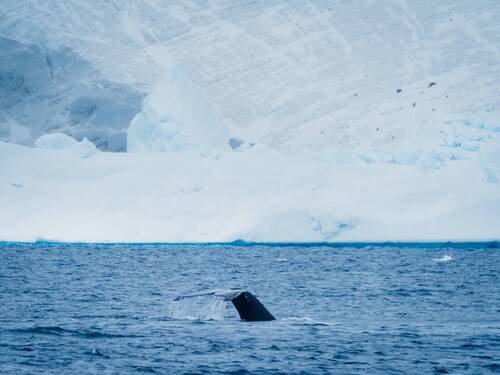
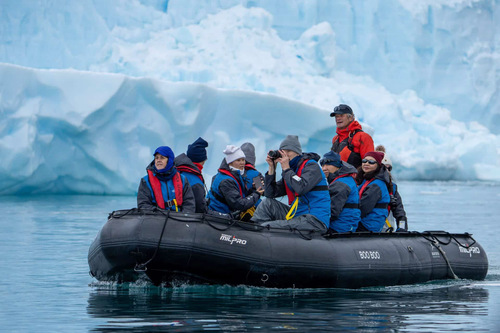
I've often found that the most meaningful moments during polar expeditions occur when guests make a personal connection with the place: standing in front of a glacier face glowing blue in the Antarctic sunlight, watching a penguin porpoise through icy water, or seeing a humpback whale surface against a backdrop of snow-covered mountains. Those experiences can transform Antarctica from an abstract concept into something tangible — and travellers who witness it firsthand often become some of its most effective advocates.
The goal of expedition travel to Antarctica is not to return home feeling helpless about global warming. It is to leave with a deeper understanding of how interconnected our planet truly is. Travellers often arrive expecting Antarctica to be a remote wilderness disconnected from their lives, and instead leave understanding that it is intimately connected to their coastlines, weather, oceans, and future. That understanding, carried home and shared with others, is itself part of the answer to how we stop global warming in Antarctica.
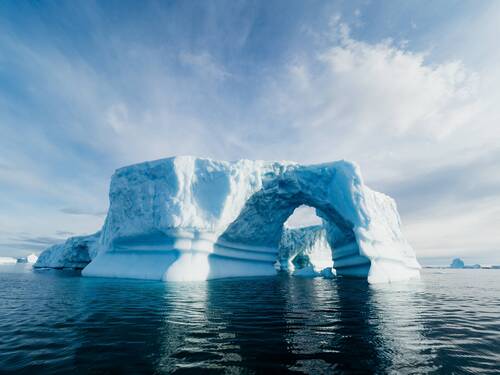
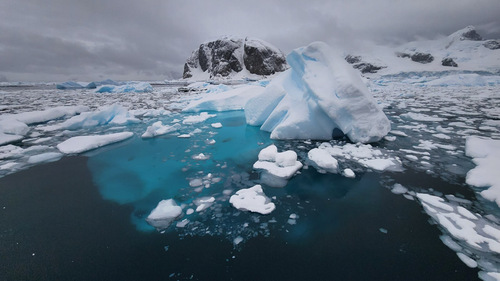
Antarctica remains one of Earth's greatest scientific laboratories. Every year, researchers learn more about how ice sheets respond to warming, how ecosystems adapt to changing conditions, and how global warming affects the frozen continent and the world beyond it. At the same time, Antarctica remains a place of extraordinary wonder. Despite the challenges posed by a warming climate, it is still possible to stand on the deck of a ship and watch sunlight illuminate an iceberg in gorgeous shades of blue, to witness wildlife thriving in one of the harshest environments on Earth, and to feel the same sense of awe that inspired the earliest explorers more than a century ago. The more we understand this remarkable continent, and the more we act on what we learn, the better equipped we are to navigate the changes unfolding across our shared planet.


About Aurora Expeditions
Aurora Expeditions was founded in 1991 by polar mountaineer Greg Mortimer OAM and Margaret Mortimer, and has spent more than three decades pioneering small-ship expedition travel to Antarctica and other remote corners of the planet. The company's mission is to inspire, educate, and advocate for the protection, preservation, and regeneration of wild places — with the goal of building a global community of ambassadors for the planet, not simply a list of places visited. Every voyage is designed around that same idea: that the best way to protect a remote place is to help people fall in love with it first.
As a Certified B Corporation, Aurora backs that mission with measurable action in Antarctica itself. Expedition ships use fuel-efficient Ulstein X-Bow® hulls and virtual anchoring technology to reduce impact on the seabed, guest numbers are capped well below industry norms to protect fragile landing sites, and strict biosecurity protocols apply at every shore visit. Onboard, Aurora's ships double as citizen science platforms, with guests contributing directly to research on wildlife, ocean health, and climate change alongside visiting scientists, complemented by carbon offset programs and ongoing investment in cleaner ship technology. It's the same instinct — that understanding a place is the first step to protecting it — that shapes how Aurora talks about global warming in Antarctica: not as a reason to stay away, but as a reason to go, learn, and come home ready to advocate for the ice.


Dr. Ulyana Horodyskyj Peña is a glaciologist, science communicator, educator, and explorer whose work spans Antarctica, the Arctic, the Andes, and the Himalayas. She serves as Head of Science Communication (Associate Scientist) for the North Central Climate Adaptation Science Center at the University of Colorado Boulder and is the founder of Science in the Wild, an initiative that connects people with science through field experiences and storytelling. A National Geographic Explorer and veteran of numerous polar expeditions in the Arctic and Antarctica, she studies the impacts of climate change and environmental pollutants in snow, ice, and remote ecosystems while helping translate complex science into engaging stories for public audiences.
Frequently asked questions about global warming in Antarctica
Is Antarctica actually getting warmer?
Air temperatures vary widely by region and season, but the Southern Ocean surrounding Antarctica has absorbed enormous amounts of excess heat, and decades of satellite and field data confirm the continent has been losing land ice at an accelerating rate since the 1970s. That's clear evidence of global warming in Antarctica, even in places where it isn't visible on the surface.
How much would sea levels rise if all of Antarctica's ice melted?
If the entire Antarctic ice sheet melted, a process that would take many centuries, global sea levels would rise by nearly 58 metres (IPCC, 2021). Scientists don't expect this scenario within our lifetimes, but even a small fraction of that ice melting in Antarctica would have significant consequences for coastal cities worldwide.
What is causing global warming in Antarctica?
Global warming in Antarctica is driven primarily by greenhouse gas emissions, which have warmed the Southern Ocean and atmosphere. Much of the resulting ice loss happens below the surface, as warmer ocean water melts ice shelves from underneath, destabilising the glaciers behind them.
Which animals are most affected by global warming in Antarctica?
Species that depend on sea ice for breeding, resting, or feeding are most at risk, including emperor penguins, Adélie penguins, and several seal species. Because Antarctic krill also rely on sea ice, changes ripple up the food chain to affect penguins, seals, and whales alike.
Can global warming in Antarctica be stopped or reversed?
Antarctic ice loss is directly linked to global greenhouse gas emissions, so reversing it depends on the same collective action needed everywhere else: cutting emissions, protecting carbon-absorbing ecosystems, and supporting climate science and policy. Individual choices, from energy use to how people travel, all contribute to that response.
Spirit of Antarctica
Antarctic Explorer
Antarctica Complete
References
- Atkinson, A., Hill, S. L., Pakhomov, E. A., Siegel, V., Reiss, C. S., Loeb, V. J., et al. (2019). Krill (Euphausia superba) distribution contracts southward during rapid regional warming. Nature Climate Change, 9, 142–147. https://www.nature.com/articles/s41558-018-0370-z
- IPCC. (2021). Climate Change 2021: The Physical Science Basis. Contribution of Working Group I to the Sixth Assessment Report of the Intergovernmental Panel on Climate Change. Cambridge University Press. https://www.ipcc.ch/report/ar6/wg1/
- National Snow and Ice Data Center (NSIDC). (2023). Antarctic sea ice reaches record low maximum extent. Boulder, Colorado. https://nsidc.org/news-analyses/news-stories/antarctic-sea-ice-hits-record-low-maximum-extent-2023
- Zhou, S., Meijers, A.J.S., Meredith, M.P., et al. (2023). Slowdown of Antarctic Bottom Water export driven by climatic wind and sea-ice changes. Nature Climate Change, 13, 701–709. https://www.nature.com/articles/s41558-023-01695-4
- Rignot, E., Mouginot, J., Scheuchl, B., van den Broeke, M., van Wessem, M. J., & Morlighem, M. (2019). Four decades of Antarctic Ice Sheet mass balance from 1979–2017. Proceedings of the National Academy of Sciences, 116(4), 1095–1103. https://www.pnas.org/doi/full/10.1073/pnas.1812883116
- Scambos, T. A., Bell, R. E., Alley, R. B., et al. (2017). How much, how fast? A science review and outlook for research on the instability of Antarctica's Thwaites Glacier in the 21st Century. Global and Planetary Change, 153, 16–34. https://www.sciencedirect.com/science/article/pii/S092181811630491X


