 Call to book
Orca Whales in Antarctica: What to Know and Where to See Them
Few encounters in the natural world stop you in your tracks quite like a wild orca. Whether it's a towering dorsal fin breaking the glassy surface of an Antarctic Bay, or a coordinated hunt unfolding just metres from a Zodiac, these are the moments that stay with you long after you've returned home. Here's everything you need to know about one of Antarctica's most iconic and intelligent inhabitants.
Appearance
The orca, or killer whale, is the largest member of the dolphin family and one of the ocean's most recognisable predators. Its powerful black-and-white body, rounded head and striking white eye patches create an unmistakable silhouette against the icy waters of Antarctica. A grey saddle patch sits behind the dorsal fin, while the white underside extends from the lower jaw along the body. Males are distinguished by their towering dorsal fins, which can reach up to two metres in height, and their large, paddle-shaped pectoral fins. Females are generally smaller, with a shorter, curved dorsal fin.
Four distinct Antarctic forms of orca have been identified — Types A, B, C and D — each uniquely adapted to different habitats and prey, and each subtly different in appearance. Type A is the largest form, recognised by its horizontal white eye patch and preference for open water. Type B orcas are split into two groups: the Large Type B, which has a very large eye patch often tinged yellow from diatom algae on the skin and is known as the "pack ice" orca, and the smaller Type B, which has a rounder, oval eye patch and specialises in hunting penguins. Type C is the smallest Antarctic form, identifiable by its narrow, forward-slanting eye patch. Type D, found in subantarctic waters, is the most visually distinctive of all — with a tiny eye patch, a very rounded head and a blunt snout — and remains the least studied. Around the Antarctic Peninsula, Type B orcas are the most commonly encountered, often seen navigating through sea ice in search of seals, penguins and fish.
Quick Orca Whale Facts
| Scientific name | Orcinus orca |
| Length | 5-8m |
| Weight | 2-8 tons |
| Population | Approximately 50,000 individuals |
| Species Conservation Status | Data Deficient |
Diet and Hunting Behaviour
Orcas are highly adaptable hunters with diets that vary between the different Antarctic forms. Type A individuals are known to hunt Antarctic minke whales, while Type B orcas specialise in seals and may also prey on other pinnipeds, whales and penguins. Type C is thought to feed primarily on fish, whereas Type D appears to be a more generalist predator, taking a range of prey including penguins, fish, seals and whales. Although occasionally encountered alone, orcas are most often seen travelling in closely connected pods of five to fifteen individuals. Their strong social bonds, intelligence and coordinated hunting strategies make them among the most sophisticated predators in the marine environment.
What truly sets orcas apart, however, is not just what they hunt, but how they hunt — and how that knowledge is passed on. Among the most remarkable behaviours observed in Antarctic waters is wave-washing, a technique used by Type B orcas in which individuals work together in coordinated formation, taking turns to swim in unison and generate a targeted wave powerful enough to wash seals from ice floes. This behaviour is one of the most thoroughly documented examples of cultural learning in non-human animals. Hunting techniques such as these are not instinctive but learned, passed down through generations within pods — a form of cultural transmission that also extends to vocalisation, with different pods maintaining their own distinct dialects of calls and signals.
Navigation and communication beneath the ice rely on echolocation, with orcas producing precise clicks to locate prey in conditions where visibility is limited, separate from the social calls that maintain bonds within the pod. Underpinning the cohesion of these groups are the pod's eldest females. Orca females can live to between 80 and 90 years, and those that have passed reproductive age — typically around 40 — continue to play a vital role, leading their pods and drawing on decades of accumulated knowledge to locate food. This grandmother effect, rare across the animal kingdom, speaks to the remarkable depth of orca society and the enduring value of experience within it.

Breeding Cycle
Orcas have a slow reproductive cycle, with females giving birth to a single calf following a gestation period of approximately 15–18 months. Calves may nurse for up to 18 months, and females typically produce one calf every five years. Males usually mate with females from other pods. Long-lived by nature, orcas have an average lifespan of around 50 years — though the eldest females, as noted above, can far exceed this, their longevity becoming one of the pod's greatest assets.
Habitats and When to See Them
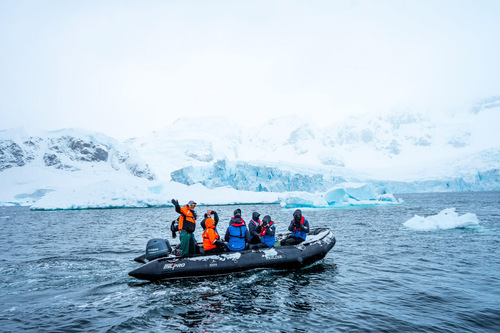
Orcas are found in every ocean on Earth, but Antarctica remains one of the finest places in the world to observe them in the wild. The Antarctic Peninsula and surrounding pack ice are particularly productive, with sightings most likely between November and March, when the austral summer brings longer days, receding sea ice and an abundance of prey. Type B orcas are the most frequently encountered during this period, often spotted close to ice floes as they search for Weddell and crabeater seals, while Type A individuals may be seen in the more open waters further offshore. Encounters can be sudden and dramatic — a towering dorsal fin cutting through glassy water, or a coordinated wave-wash unfolding just metres from a Zodiac.

Orca Whale FAQ’s
Do orcas live alone or in groups?
Orcas are highly social animals that usually travel in pods of five to fifteen individuals. These close-knit groups display strong social bonds and work together using coordinated hunting and communication strategies.
How can you identify an orca in Antarctic waters?
Orcas are recognised by their striking black-and-white colouring, rounded head, white eye patches and grey saddle patch behind the dorsal fin. Males have tall dorsal fins that can reach up to two metres in height.
What do Antarctic orcas eat?
Diet varies between the different Antarctic forms. Depending on the type, orcas may feed on fish, penguins, seals, pinnipeds or even whales, making them highly adaptable predators.
What is the best Aurora Expeditions voyage to see orcas?
Any Aurora Expeditions voyage to the Antarctic Peninsula offers the potential for orca encounters, with the highest likelihood during the November to March season. Speak to our team to find the itinerary that gives you the best chance of witnessing these remarkable animals in the wild.
Featured Expeditions
Polar Expedition
Antarctica
Spirit of Antarctica
Duration
11 Days
2026 Season
Dec
2027 Season
Feb, Nov, Dec
From CAD
$22,822
$26,849
per person
twin share