From snow-capped volcanoes and high-altitude páramo to tropical rainforest and Pacific islands, Ecuador packs remarkable geographical and biological diversity into a relatively small country. But where is Ecuador in South America, and what makes this nation one of Latin America's most fascinating destinations?
Located on the continent’s northwestern Pacific coast, Ecuador borders Colombia to the north and Peru to the south and east. The Equator crosses the country, while the Andes run through its centre and the Amazon Basin extends across its eastern lowlands.
Ecuador offers an extraordinary intersection of geography, wildlife, culture and natural history. Here are 20 interesting facts about Ecuador that reveal just how diverse this South American nation really is.
Ecuador Fast Facts
Location | Northwestern South America |
Captial City | Quito |
| Population | 18.4 million (2026) |
Official Currency | US Dollar |
| Official Language | Spanish alongside recognised Indigenous languages |
| Regions | Coast, Andes, Amazon and Galápagos |
| Best Time to Visit Ecuador | Varies by region, with June to September generally best for the Andes and highlands, and December to April popular for the coast and Galápagos Islands |
| Things to do Ecuador | Galápagos wildlife, Amazon rainforest, Andes hiking and Quito's historic centre |
1. Ecuador is Named After the Equator
Ecuador's name comes from the Spanish word for the equator and is home to the famous Mitad del Munda monument located in its capital city of Quito. While long believed to mark the exact equator, modern GPS measurements show the true line is located nearby, close to the Intiñan Solar Museum.
2. Ecuador Has Four Distinct Geographical Regions
Ecuador is divided into four distinct regions: the Costa (Coast), Sierra (Andes Highlands), Amazonía (Amazon Rainforest), and the Galápagos Islands. While the Galápagos are part of Ecuador, they lie about 1,000 kilometres off the mainland and have a unique climate and ecosystem. The mainland regions each feature their own microclimate, from the tropical Costa and cool Andean Sierra to the hot, humid Amazon rainforest of El Oriente.
3. Ecuador Is One of the Most Biodiverse Countries on Earth
Despite being roughly the size of the United Kingdom, Ecuador is considered one of the most biodiverse countries on Earth. The country's National Biodiversity Institute (INABIO) has recorded around 18,500 species of vascular plants alone, including thousands found nowhere else in the world, thriving across its four remarkably diverse regions. Few places on the planet pack such an extraordinary variety of ecosystems into such a compact area.
4. Ecuador Is Home to Approximately 16% of all Bird Species on Earth
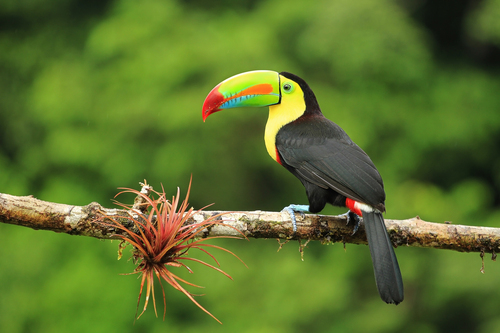
Ecuador is home to more than 1,600 recorded bird species, representing approximately 16% of all bird species on Earth. Despite its relatively small size, the country is considered one of the world's premier birdwatching destinations, supported by its habitats ranging from cloud forests and Andean highlands to the Amazon Rainforest and the Galápagos Islands.
5. Ecuador Is One of the World’s Richest Orchid Hotspots
Ecuador is home to more than 4,000 orchid species, making it one of the most orchid-rich countries in the world. The country's varied landscapes and microclimates, from cloud forests and Andean slopes to the Amazon rainforest, provide ideal conditions for these remarkable plants to thrive.


6. Ecuador Is Home to the Spectacled Bear
The spectacled bear is South America's only native bear species and can be found in Ecuador's cloud forests and Andean regions. Named for the distinctive markings around its eyes, the species is believed to have inspired the fictional character Paddington Bear.
7. Antarctica and Ecuador Are Linked by Humpback Whales
Each year, humpback whales travel between Antarctic feeding grounds and Ecuador's tropical Pacific waters, where they breed and raise their young. It's one of the longest mammal migrations on Earth.
8. Ecuador Became the First Country to Grant Rights to Nature
In 2008, Ecuador became the first country in the world to recognise the rights of nature in its Constitution. Under Article 71, nature, or Pacha Mama, is recognised as having the right to "exist, persist, maintain and regenerate its vital cycles, structure, functions and evolutionary processes".
Rather than viewing nature solely as a resource for human use, Ecuador's Constitution grants legal rights to ecosystems themselves. It was the first time a country had formally enshrined the rights of nature in its constitution, reflecting the importance of environmental protection and biodiversity to Ecuador's national identity.
9. Ecuador Is Home to More Than a Dozen Indigenous Nationalities
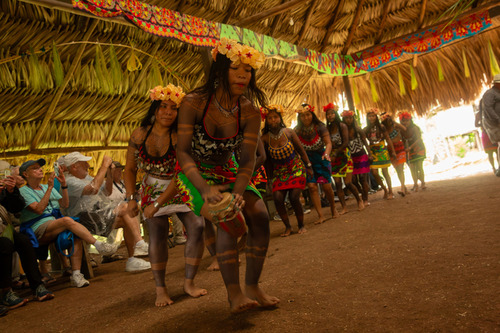
Despite its relatively small size, Ecuador is home to 14 officially recognised Indigenous nationalities and numerous Indigenous languages. From the Quechua-speaking communities of the Andes to the Waorani people of the Amazon, Indigenous cultures remain deeply connected to the country's landscapes and continue to shape Ecuador's traditions, conservation efforts and national identity.
10. Ecuador’s National Tree Helped Fight Malaria Around the World
The cinchona tree, Ecuador's national tree, was the original source of quinine, the world's first effective treatment for malaria. Harvested from the tree's bark, quinine saved countless lives and remained one of the most important antimalarial medicines for centuries. The cinchona tree is now recognised as one of the most historically significant medicinal plants in the world.


11. The Panama Hat Actually Comes From Ecuador
Despite its name, the famous Panama hat is Ecuadorian.
The traditional hat is woven from toquilla straw, a fibre obtained from a native palm of Ecuador’s coast. Depending on the quality and fineness of the weave, making a single hat can take anywhere from one day to eight months.
12. Ecuador Produces Some of the World’s Finest Chocolates
Ecuador is one of the world's leading producers of fine-flavour cacao, the variety used in many premium chocolates. The country's famous Nacional cacao has been cultivated for centuries and is prized for its complex floral and fruity notes. Today, Ecuador remains one of the most important sources of high-quality cacao for chocolatiers around the world.
It's one of many connections shared across Latin America, where cacao has been cultivated for generations in countries including Costa Rica.
13. Ecuador Is the World’s Leading Banana Exporter
Bananas are one of Ecuador's most important exports, with the country supplying more than a quarter of the world's internationally traded bananas. From Europe and North America to Asia, Ecuadorian bananas are enjoyed around the globe.
14. Ecuador Produces Roses Exported Around the World
Ecuador is also one of the world's leading exporters of roses. Thanks to its high-altitude growing conditions, abundant sunlight and equatorial climate, Ecuadorian roses are renowned for their large blooms, vibrant colours and long stems, making them highly sought after in international flower markets.
15. Ecuador Uses US Currency
Since 2000, Ecuador has used the United States dollar as its official currency, making it one of the few sovereign nations in the world to do so. The move was introduced to help stabilise the economy following a period of financial turmoil and remains a distinctive feature of modern Ecuador. While US banknotes are used throughout the country, Ecuador also mints its own centavo coins, which circulate alongside US coins.


16. Quito Is One of the World's Highest Capital Cities
Sitting at approximately 2,850 metres above sea level, Ecuador's capital, Quito, is among the highest capital cities in the world. Surrounded by the Andes and overlooked by volcanic peaks, the city combines spectacular mountain scenery with one of Latin America's best-preserved historic centres.
17. Ecuador Is Home to Two of the World’s First UNESCO World Heritage Sites
In 1978, UNESCO inscribed both the Galápagos Islands and Quito's Historic Centre on its inaugural World Heritage List. The two sites were among the first ever recognised by UNESCO, highlighting Ecuador's extraordinary combination of natural and cultural heritage.
Today, the Galápagos Islands are celebrated for their unique biodiversity, while Quito's remarkably well-preserved historic centre is considered one of the finest examples of colonial architecture in Latin America.
18. Ecuador’s Galápagos Islands Played a Role in Darwin’s Theory of Evolution
In 1835, Charles Darwin spent five weeks exploring the Galápagos Islands during the voyage of HMS Beagle.
His observations of the islands’ wildlife contributed to the development of his theory of evolution by natural selection. The Charles Darwin Foundation describes the Galápagos as “a natural laboratory for understanding adaptation and evolution”.
Today, the islands remain one of the world's most important places for observing wildlife adaptations and ecological processes.
19. Ecuador's Highlands Are Defined by Volcanoes
Ecuador's central highlands are framed by a dramatic chain of volcanic peaks, including Cotopaxi, Cayambe and Chimborazo. Often referred to as the Avenue of the Volcanoes, this spectacular Andean corridor stretches through the heart of the country and includes some of South America's most iconic mountain landscapes, including Cotopaxi, one of the world's highest active volcanoes.
20. Chimborazo Is the Closest Point on Earth to the Sun
At 6,268 metres above sea level, Chimborazo is Ecuador's highest mountain. But its most remarkable claim to fame has nothing to do with its height.
Because the Earth bulges slightly at the Equator, Chimborazo's summit is actually the point on Earth's surface farthest from the planet's centre, even though Mount Everest stands higher above sea level. According to NASA, Chimborazo's summit is more than 2,000 metres farther from the centre of the Earth than Everest's. It all comes down to location, not elevation.

Inspired by Ecuador’s wild side?
Ecuador may not be on Aurora Expeditions' itinerary, but its extraordinary biodiversity, volcanic landscapes and remarkable concentration of wildlife capture the essence of what makes Latin America such a compelling region to explore.
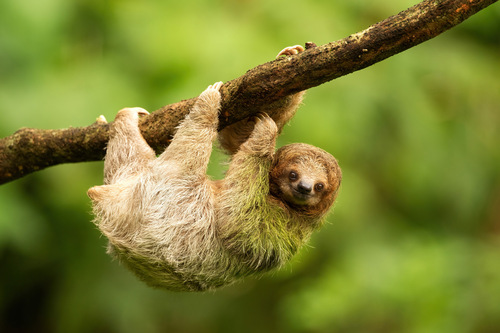
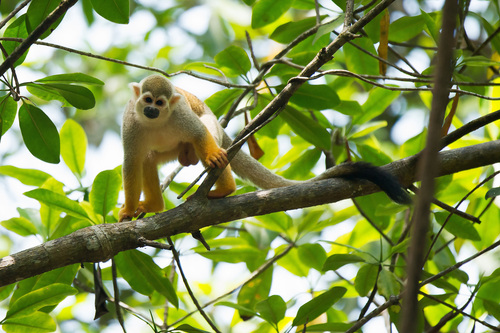
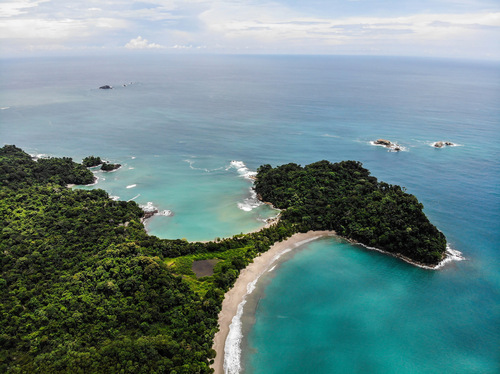
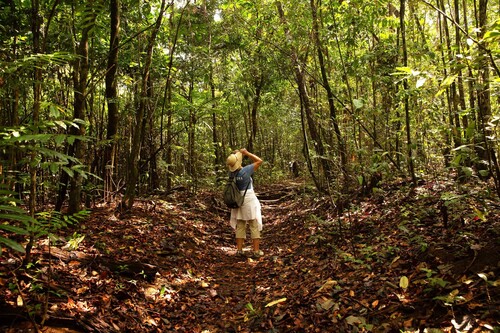
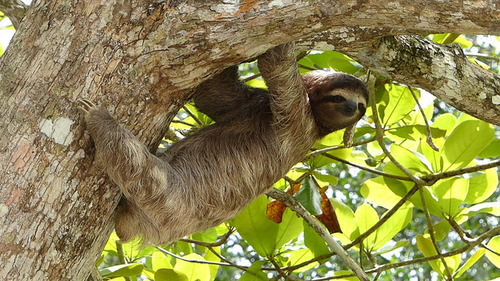
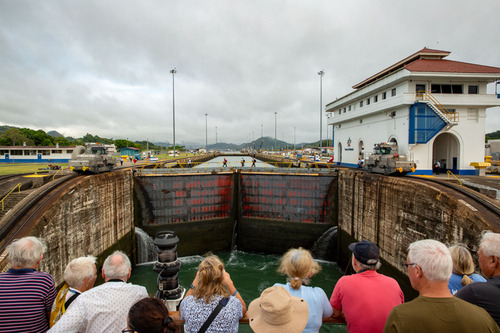
If Ecuador has sparked your curiosity, there are countless discoveries waiting beyond its borders. In Costa Rica, tropical rainforests teem with wildlife, from colourful birdlife and monkeys to sloths hidden among the canopies. In Panama, lush coastlines, island archipelagos and vibrant ecosystems reveal the meeting point of two oceans and two continents.
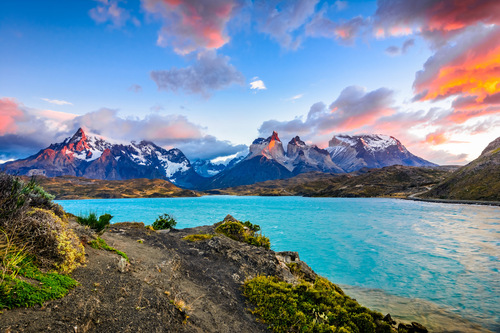
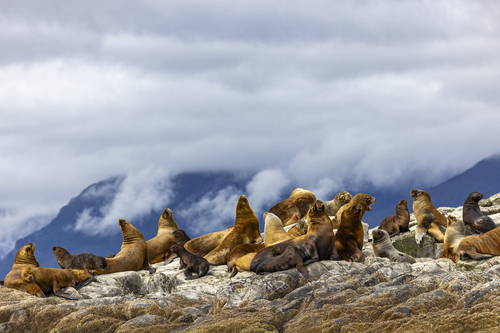
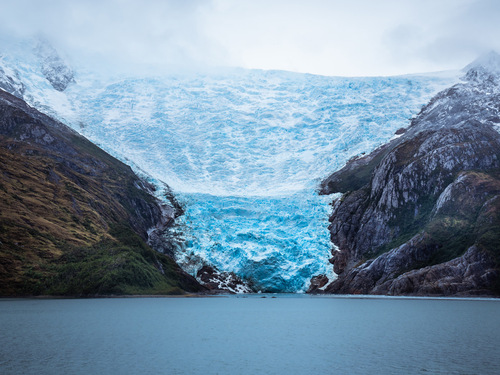
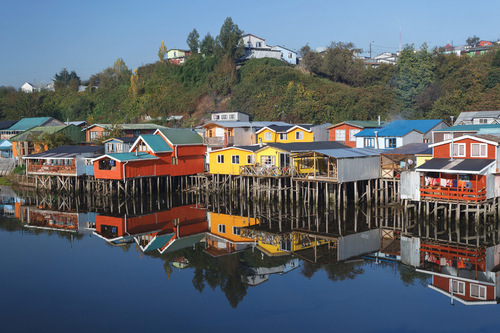
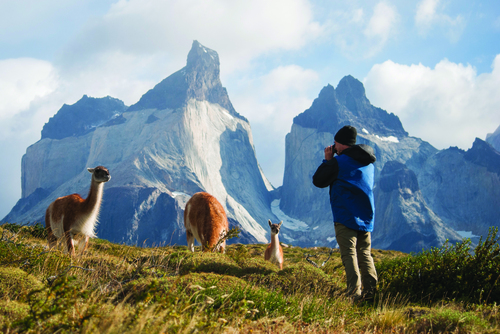
Further south, the dramatic landscapes of Chile and Patagonia offer a different perspective on the natural world. Towering glaciers, snow-capped peaks, fjords and windswept wildernesses showcase the raw forces that have shaped South America for millennia, while wildlife thrives in some of the planet's most remote environments.
From tropical forests and volcanic landscapes to icy fjords and glacial frontiers, Latin America is a region defined by diversity, discovery and wonder.
Explore The Americas with Aurora Expeditions and discover where curiosity can take you next.