Emperor penguins are the largest penguin species on Earth, standing up to 1.3 m tall and weighing up to 45 kg. They live exclusively in Antarctica, can dive deeper than any other bird and survive the coldest winters on the planet through a remarkable set of physiological and behavioural adaptations. Read on for 12 fascinating emperor penguin facts!
1. They Are the World's Largest Penguin Species
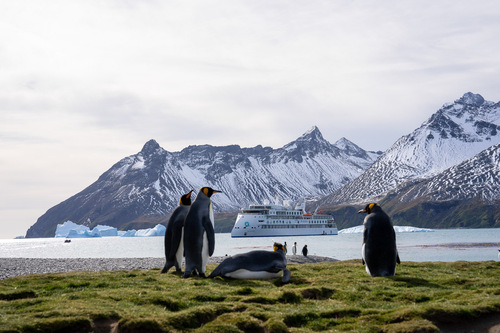
How tall and big are emperor penguins? They stand between 1.1-1.3 m tall and weigh between 22-45 kg. This makes them both the tallest and heaviest of the 18 recognised penguin species. Their closest relative, the king penguin, grows to only about 95 cm in height.
Their larger size provides an important survival advantage. With greater body mass and a lower surface‑area‑to‑volume ratio, emperor penguins lose heat more slowly - a crucial adaptation in Antarctica, where temperatures can drop below −60°C and winds can exceed 200 km/h.

2. They Live Exclusively in Antarctica
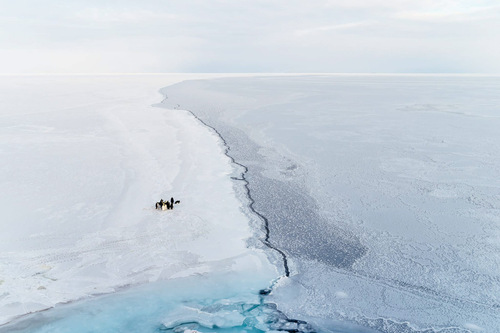
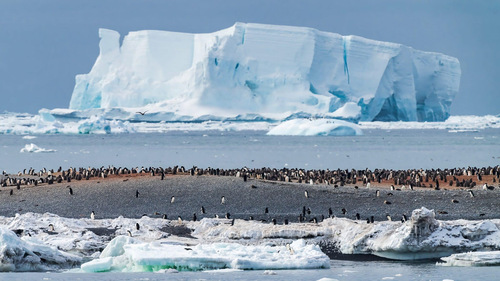
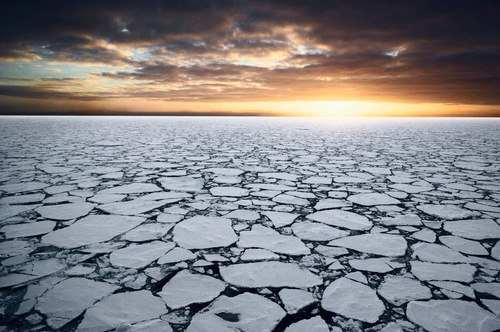
Where do emperor penguins live? Unlike many penguin species that inhabit sub‑Antarctic islands or temperate coastlines, emperor penguins are found exclusively on and around the Antarctic continent. They breed on stable fast ice, the sea ice attached to the coastline, which provides a reliable platform for raising their young. Today, there are around 50-60 known colonies, spread across Antarctica from the Ross Sea to the Weddell Sea.
Curious why penguins aren’t found in the Arctic? The answer lies in geography and evolution - you can explore this further in our article on why penguins are absent from the Arctic.
3. Why They’re Called Emperor Penguins
Early explorers and naturalists named the emperor penguin for its imposing size, upright stance, and striking yellow‑orange markings along the neck. Together, these features give the bird an almost regal appearance that sets it apart from other penguin species.
4. They Are Record-Breaking Divers
Emperor penguins are capable of diving to depths of up to 565 metres, making them the deepest‑diving birds on Earth. During typical foraging trips, they hunt at depths of around 150-250 metres, feeding on fish, squid and krill beneath the Antarctic ice, but can exceed 300 metres when needed. To put this in perspective, 565 metres is deeper than the height of the Empire State Building!
5. They Can Hold Their Breath for Nearly Half an Hour
How long can emperor penguins hold their breath? They can hold their breath for up to 27 minutes on a single dive, the longest of any bird species. Several physiological adaptations make this possible. Emperor penguins have unusually high concentrations of myoglobin (an oxygen-storing protein in muscles), giving their muscle tissue a dark red colour and allowing them to store more oxygen per unit of blood than most mammals. Their heart rate also drops from around 200 beats per minute at the surface to as few as 15-20 beats per minute underwater, decreasing oxygen consumption dramatically. The result is a bird that can hunt at extraordinary depths for extended periods without surfacing.


6. Their Swimming Speed Is Surprisingly Fast
An emperor penguin’s swimming speed averages 6-9 km/h with bursts up to 12 km/h. In water, their torpedo-shaped bodies and stiff, flipper-like wings make them supremely efficient. On land, however, they move more slowly, either waddling upright or sliding across the ice on their bellies, propelling themselves with their flippers and feet.
7. They Have Multiple Overlapping Layers of Feathers
Emperor penguins have more layers of feathers than any other bird species, with a density of around 100 feathers per square centimetre. Each layer plays a distinct role: the outermost is oiled and waterproof, preventing cold water from penetrating to the skin and the inner layers trap warm air like a down sleeping bag. Beneath all the feathers, a layer of subdermal fat up to 3 cm thick provides additional insulation. Together, these layers can maintain a skin temperature close to 37°C even when the air outside is −40°C.
8. They Huddle Together to Survive the Antarctic Winter
One of the most remarkable ways emperor penguins survive in Antarctica is through cooperative huddling. During winter storms, thousands of birds gather in tightly packed groups, sometimes called “turtle formations.” Temperatures at the centre of a huddle can reach around 37°C, a dramatic contrast to the −40°C conditions outside.
These huddles are constantly shifting. Penguins on the exposed outer edge gradually move inward, while those in the warmer centre rotate outward, ensuring all individuals share the benefits and reducing overall heat loss.
9. Males Incubate Eggs Alone Through the Darkest Months
After laying a single egg, the female transfers it to the male before returning to the sea to feed. The male is then left to incubate the egg alone for around 65 days during the Antarctic winter.
He balances the egg on his feet and shelters it beneath a warm fold of skin known as a brood pouch, without eating for the entire period. By the time the egg hatches, he may have lost a significant amount of his body weight. When the females return with food, the depleted males finally head back to sea to recover.
This makes emperor penguins unique as they are the only penguin species to breed during the Antarctic winter and the only one where the male carries out the entire incubation.

10. Chicks Are Born Completely Dependent
Emperor penguin chicks hatch covered in thin, grey, downy feathers. For the first weeks of life, chicks remain on a parent's feet and beneath the brood pouch. As they grow, they join crèches - large supervised groups of juveniles watched over by a small number of adults while their parents are at sea foraging. By around five months, chicks have moulted into their juvenile plumage and are ready to take to the sea for the first time, entirely self-sufficient, despite never having been taught to swim.
11. They Face a Threatened Future Due to Climate Change
As of April 2026, emperor penguins are classified as Endangered on the IUCN Red List, reflecting growing concern over the impacts of climate change on Antarctic sea ice. The underlying issue is direct: emperor penguins rely on stable fast ice as a breeding platform. If that ice breaks up too early in the season, chicks are forced into the ocean before they develop waterproof feathers, leading to widespread breeding failure. Recent observations have already documented colonies experiencing high chick mortality linked to early sea‑ice loss.
12. They Recognise Each Other's Voices in a Crowd of Thousands
Emperor penguins have evolved highly individualised vocal calls and research has shown they can identify a partner or offspring from their call alone, even amid the cacophony of a large colony. Parents and chicks call repeatedly until they locate one another, a process that can take time but is remarkably accurate, ensuring families are reunited in even the largest groups.
Emperor Penguin FAQs
What are 5 interesting facts about emperor penguins?
Emperor penguins are the largest penguin species, standing up to 1.3 m tall and weighing up to 45 kg. They can hold their breath for up to 27 minutes and dive to 565 m - deeper than any other bird. Males incubate eggs alone for 65 days through the Antarctic winter without eating. They have overlapping layers of feathers and huddle in groups of thousands to stay warm. And they can identify their mates and chicks by voice alone in colonies of tens of thousands.
How tall are emperor penguins?
Emperor penguins stand 1.1-1.3 m tall and weigh 22-45 kg, making them the tallest and heaviest of all 18 penguin species.
Why are they called emperor penguins?
Early explorers named them emperor penguins because of their commanding size, upright posture, and colourful neck markings - all of which gave them a regal appearance unlike any other penguin species.
Where do emperor penguins live?
Emperor penguins live exclusively in Antarctica, breeding on the stable fast ice attached to the Antarctic coastline. There are around 50-60 known breeding colonies distributed around the continent.
How do emperor penguins survive in Antarctica?
Emperor penguins survive Antarctica's extreme cold through their overlapping layers of feathers, a thick layer of subcutaneous fat, communal huddling that dramatically reduces individual heat loss, and a cardiovascular system that minimises heat exchange with the environment.
How long can an emperor penguin hold its breath?
Emperor penguins can hold their breath for up to 27 minutes, the longest of any bird. They achieve this through high myoglobin concentrations in their muscles, an enlarged blood oxygen capacity, and a dramatic slowing of heart rate during dives.
How many layers of feathers do emperor penguins have?
Emperor penguins have multiple overlapping layers of feathers at a density of around 100 feathers per square centimetre, more than any other bird species. Combined with a thick fat layer, this makes them extraordinarily well insulated against Antarctic temperatures.