What to pack, what to expect and how to get the shot
By Scott Portelli, award-winning photographer and Aurora Expeditions Photography Guide
"I first travelled to Antarctica more than two decades ago, and it remains one of the most exciting places I have ever photographed. No two days - or even two hours - are the same. Light moves across the ice, wildlife appears when you least expect it and conditions can transform an ordinary scene into something extraordinary.
That unpredictability is also what makes photographing the polar regions challenging. You need to be ready when a moment unfolds, while respecting the wildlife and environment you have travelled so far to experience.
The good news is that you don't need the most expensive camera or an enormous collection of lenses. Whether you use a smartphone, compact camera or professional system, preparation, patience and an understanding of your subject will make the greatest difference."
What to Expect on a Photography Expedition
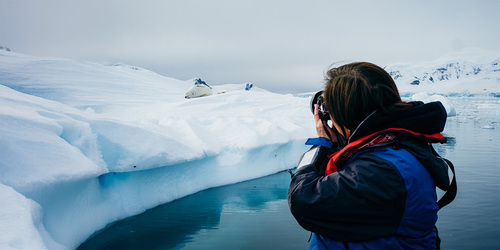
Aurora Expeditions' dedicated Through the Lens photography voyages are designed for photographers of all abilities. You might be learning how to move beyond your camera's automatic settings or refining techniques you have practiced for years.
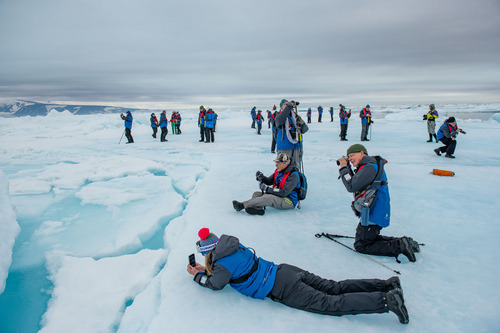
Photography Guides provide presentations and practical guidance covering camera settings, composition, wildlife photography and working with changing light. Just as importantly, they join you in the field, where advice can be applied to the conditions and subjects directly in front of you.
With one professional photographer for every eight expeditioners, smaller Zodiac groups and extended time in the field, you’ll have more opportunities to capture extraordinary landscapes and wildlife.
What I Pack
My own equipment changes depending on the destination and the wildlife I expect to encounter. The most important consideration is choosing equipment you can carry comfortably and operate quickly.
A simple and versatile kit will be enough for most expeditioners:
Equipment | Why I recommend it |
Camera body | Choose a camera you know how to operate confidently. |
Spare camera body | Useful as a backup and reduces the need to change lenses in difficult conditions. |
Wide-angle lens, such as 16-35mm | Landscapes, icebergs, ship scenes and environmental portraits. |
Mid-range zoom, such as 24-70mm or 70-200mm | A versatile option for landscapes and wildlife. |
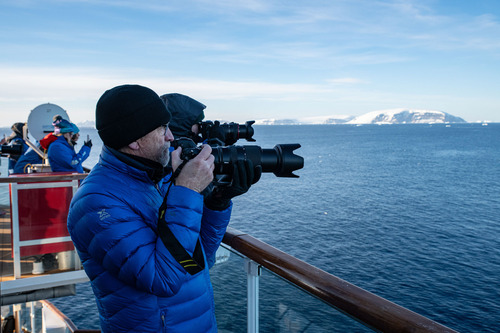
Telephoto zoom, such as 100-400mm or 100-500mm | Wildlife photography from the ship, Zodiac or shore. |
Smartphone or action camera | Video, wide-angle scenes and spontaneous moments. |
You don't need to carry all of these. For many travellers, one camera and a versatile zoom lens is the best combination. The lighter your kit, the easier it is to move safely and respond quickly.
Accessories Worth Bringing
A few small accessories can make a significant difference:
- Spare batteries, as cold conditions can reduce battery life.
- More memory cards than you think you will need.
- A comfortable camera strap or harness.
- A waterproof cover or dry bag for Zodiac journeys.
- Lens cloths and a hand-operated blower.
- Chargers, cables and destination-appropriate power adaptors.
- A laptop and portable solid-state drive if you want to review and back up your work onboard.
- A circular polarising filter, which can help manage glare and reflections in some conditions.
A tripod can be useful for long exposures and low-light photography, but consider whether you will use it enough to justify carrying it. Space and conditions during landings and Zodiac cruises can be limited.
Scott's Tips for Photographing Wildlife
Learn to Anticipate Behaviour
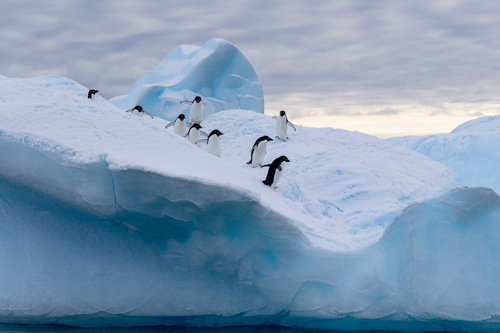
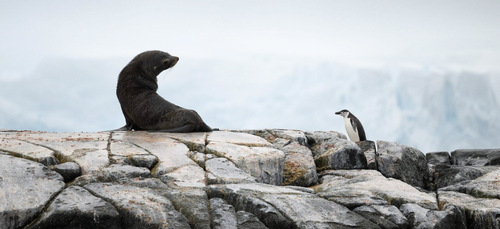
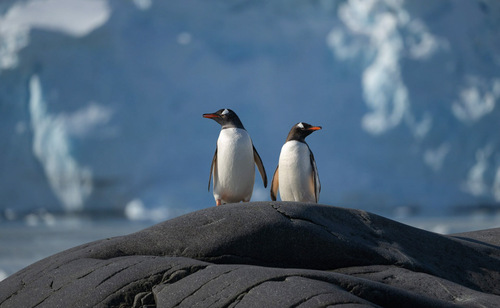
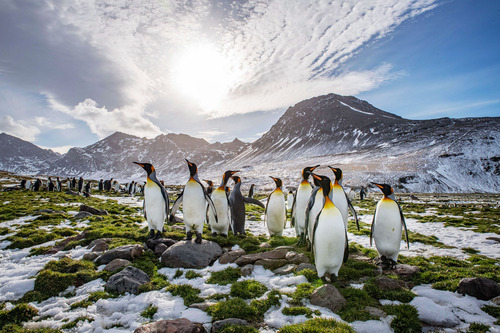
The best wildlife photographs often happen just before the obvious moment. Watch how an animal moves and responds to its surroundings. A penguin leaning forward may be preparing to jump, while a whale changing direction or arching its back may be about to dive. Understanding behaviour helps you anticipate the image rather than react after it has happened.
Prepare Before You Leave The Ship
Check your battery, memory card and basic camera settings before every excursion. Conditions can change quickly, and wildlife will not wait while you search through a menu. I usually begin with settings that suit the expected conditions, then adjust once I am in the field.
Use a Fast Shutter Speed
Ships, Zodiacs and wildlife can all be moving simultaneously. A faster shutter speed will give you a better chance of producing a sharp image, particularly when photographing birds in flight or animals moving through the water.
Show the Environment
A close wildlife portrait can be powerful, but don't overlook the wider scene. An animal surrounded by sea ice, mountains or ocean can tell a stronger story about where it lives.
Photograph the Light, Not only the Subject
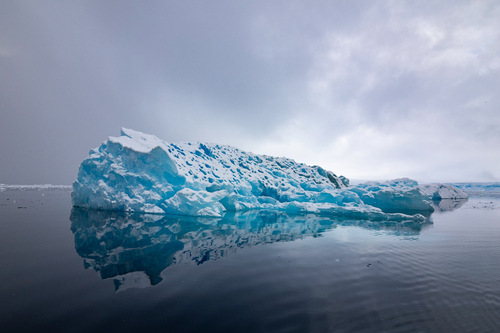
Polar light can transform familiar scenes. Watch for reflections, mist, backlighting and the subtle colours within snow and ice. Sometimes the most compelling photograph isn't the closest wildlife encounter - it is the moment when light, landscape and subject come together.
Give your Subject Room to Move
When photographing a moving animal, leave space in front of it. This gives the image a sense of direction and makes the composition feel less restricted.
Put Wildlife First
No photograph is worth disrupting an animal's natural behaviour. Always follow the guidance of the Expedition Team, maintain required distances and never attempt to attract or reposition wildlife for an image. Often, the best encounters happen when you remain still, patient and unobtrusive.
Protecting your Equipment
Spray, salt, snow and condensation are the main challenges in polar environments. Keep a lens cloth accessible and protect your equipment during Zodiac journeys, even when conditions appear calm.
When moving between cold outdoor conditions and the warm ship interior, leave your camera inside its bag temporarily so it can warm gradually. This can help reduce condensation forming on and inside the equipment.
In Antarctica, strict biosecurity procedures apply. Bags and photography equipment may need to remain off the ground at landing sites, so a well-fitted harness or strap is particularly useful. Always follow the Expedition Team's instructions.
Drone use is restricted across many of Aurora Expeditions' destinations and is not generally permitted without prior authorisation. Check the relevant rules before packing one.

Don't Forget to Look Up
Photography can help you observe a place more closely, but it can also become a barrier if you experience the entire journey through a viewfinder.
Take the photograph, then lower the camera. Watch how a penguin colony moves, listen to the sound of the ice or simply appreciate the scale of the landscape. Those moments will influence the way you photograph - and they are often the ones you remember most clearly.
Ready to Photograph the World's Wild Places?
A photography expedition is not only about returning home with more images. It is an opportunity to understand your equipment, become more observant and learn how to tell better stories about wildlife and the natural world.
Explore Aurora Expeditions' photography-focused voyages and discover where your camera could take you next.
About the Author

Scott Portelli is an international award-winning wildlife, nature and underwater photographer. He’s a member of the Australian Institute of Professional Photography (AIPP) and is regarded as a leading professional in his field. Scott has spent thousands of hours in remote locations across the globe filming and photographing nature, wildlife, the underwater environment and wild places.
Scott has spent over a decade working in the polar regions with a focus on Antarctica, the Subantarctic and Arctic regions, producing a unique portfolio of fine art photography that showcases the intricate environment and its intriguing inhabitants. Working in extreme conditions, Scott’s photography provides a rarely seen glimpse above and below the surface in some of the harshest places on the planet.
As a professional nature, wildlife, underwater and aerial photographer, Scott spends a lot of time travelling the world to remote destinations in search of some of the most amazing creatures on the planet. For Scott, it is about the journey, bringing an idea to life by capturing a moment in time or by evoking an emotion. Each image has a unique story that is usually a very intimate moment that Scott may have shared with the subject.
“To create interesting concepts, it sometimes involves me immersing myself in an environment in order to research the location, subject matter and what opportunities may present themselves. I once spent two months on the back of a snow mobile in Baffin Island, Canadian Arctic in minus 37 degrees just to do a reconnaissance of the region for a series of photos I wanted to produce. In the end, I love what I do and I love sharing the natural world through photography.”
Scott was awarded at the prestigious Wildlife Photographer of the Year in London in 2016, announced National Winner of the Sony World Photography Awards 2016 and Winner at Travel Photographer of the Year 2015. More recently, he was awarded winner in the Animal Behaviour Category at the Australian Geographic Nature Photographer of the Year ANZANG 2017, winner in the Underwater Category of the Asferico International Nature Photography Awards 2018 and runner up in the Behaviour Category at Underwater Photographer of the Year 2019. His conservation documentary also took out two awards at the prestigious French Underwater Film Festival in Marseille.
Scott's other notable awards include:
- 3rd Prize - National Geographic Travel Photo Contest - Nature Category 2019
- Winner - 13th Annual Black & White Spider Awards 2018
- Highly Honoured - Nature's Best, Windland Smith Rice International Awards 2018
- Winner - Sony World Photography Awards 2016
An accredited licensed RPAS/UAV Pilot, Scott has worked on aerial projects for some of Australia’s most sought-after tourism destinations.
Scott runs photography workshops and lectures to show enthusiasts and experts alike the best way to get the most out of their photography. On his Polar tours he specialises in Nature & Wildlife photography bringing the best tips and techniques for photographing in challenging locations.
Scott Portelli will be a special guest photographer on our Antarctica: Through the Lens voyage, departing 25 January 2027.