 Call to book
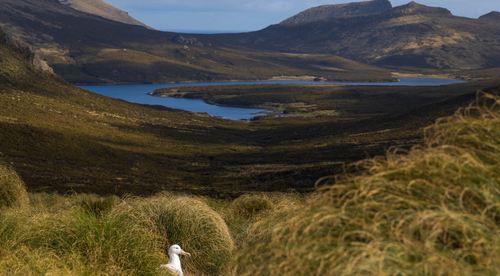
Found breeding on remote sub-Antarctic islands, with South Georgia home to the largest population, the Grey-headed albatross is easily identified by its soft ashy-grey head and neck, black bill with a bright yellow ridge, and white crescents behind its eyes. It is among the most pelagic of the albatross family, feeding far out in open ocean waters rather than over the continental shelf, and is considered one of the fastest-flying birds in the world, reaching speeds of over 100km/h using dynamic soaring. Like other albatross, it spends the vast majority of its life at sea, only returning to land to breed.
Diet and Behaviour
Grey-headed albatross feed primarily on squid, along with fish and crustaceans, hunting mostly at the surface but capable of diving several metres underwater to chase prey. They are highly efficient long-distance flyers, capable of covering over 1,000 kilometres in a single day, and undertake extensive foraging trips that can range across the entire Southern Ocean, particularly outside the breeding season. Unlike some albatross species, they rarely follow fishing vessels, instead relying on their exceptional range and navigation to find food in the open ocean. On land, they gather in colonies on steep, tussock-covered slopes and cliffs, forming strong, long-term pair bonds reinforced through vocal calls and courtship displays.
Breeding Cycle
Grey-headed albatross typically breed every second year, forming large colonies on remote, cliff-bound coastlines where a single egg is laid in a large nest built from mud and vegetation. Both parents share incubation duties over roughly 72 days, taking turns to guard the egg while the other forages far out at sea. Once hatched, chicks are brooded and fed by both parents for around five months before fledging, after which young birds spend several years at sea before returning to breed for the first time at seven or eight years old.

Grey-Headed Albatross
Credit: Scott Portelli
Featured Antarctic Expeditions
Polar Expedition
Antarctica
Spirit of Antarctica
Duration
11 Days
2026 Season
Dec
2027 Season
Feb, Nov, Dec
From CAD
$23,004
$27,063
per person
twin share