We spoke with Tarn Pilkington, IFMGA Mountain Guide and Aurora Expeditions Alpine Activities Supervisor, who leads ski touring, alpine climbing, snowshoeing and South Georgia’s Shackleton Crossing programs, about what it’s like to ski and snowboard in Antarctica.
For many travelers, Antarctica represents the ultimate frontier — a place of vast landscapes, towering peaks and unforgettable moments in nature. For those seeking a deeper connection with this extraordinary environment, ski and snowboard touring offers a unique way to experience the White Continent.
Guided by experienced alpine professionals, ski and snowboard touring in Antarctica combines expedition travel with human-powered exploration — allowing expeditioners to journey from the shoreline to panoramic summits before descending through untouched snow in one of the most remote environments on Earth.
From Zodiac to Summit
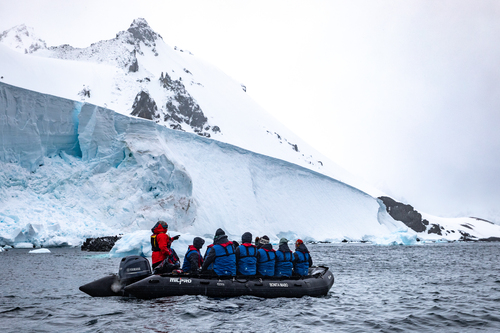
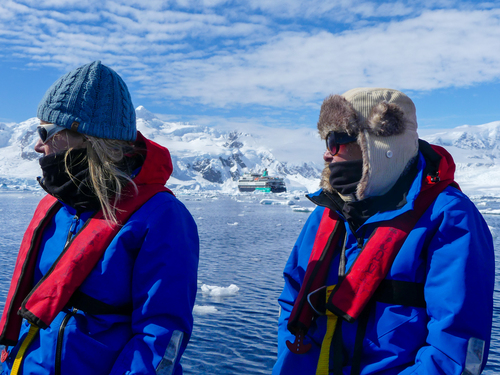
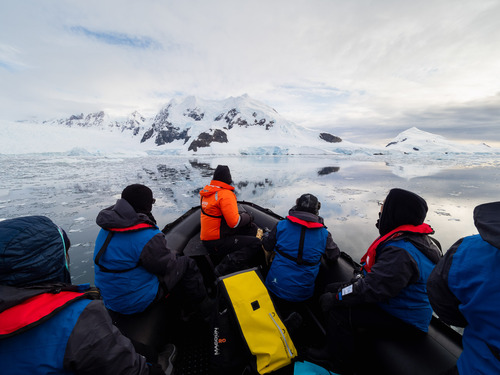
One of the most remarkable aspects of ski touring in Antarctica is how the journey begins. Instead of chairlifts or mountain roads, the day starts aboard an expedition vessel before travelling ashore by Zodiac.
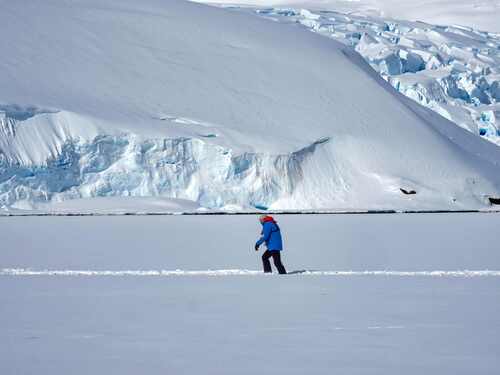
From the landing site, expeditioners transition from lifejackets to skis or snowboards and begin ascending snow-covered slopes that often rise directly from the ocean. This rare combination of sea, ice and mountain terrain creates an experience unlike anywhere else in the world.
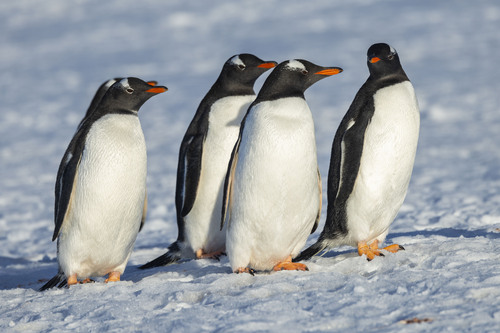
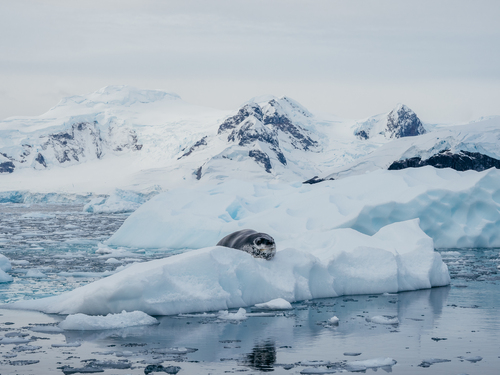
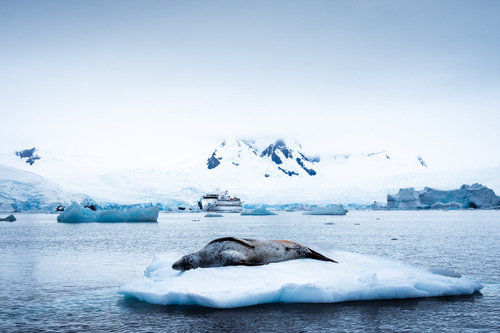
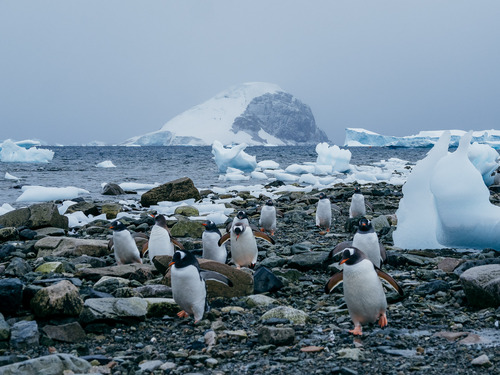
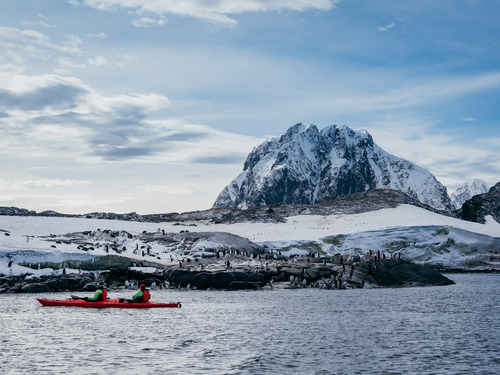
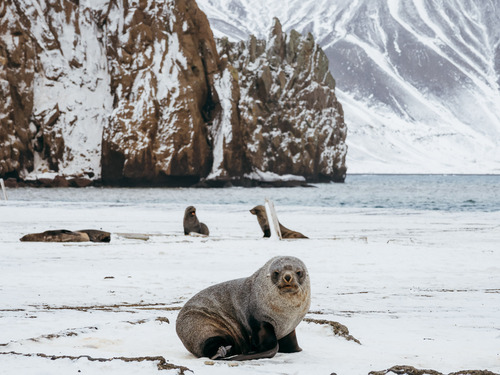
Wildlife is often part of the backdrop. Penguins may gather near landing sites, seals rest on ice, and whales are sometimes visible from higher vantage points — a reminder that this is a natural environment first and foremost.


A Landscape Made for Exploration
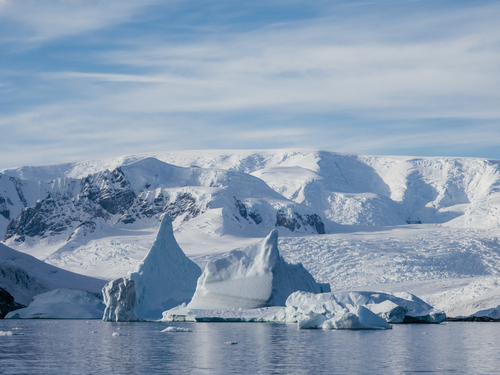
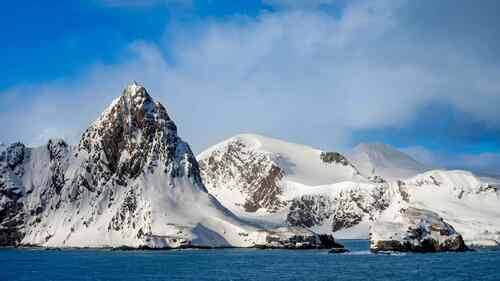
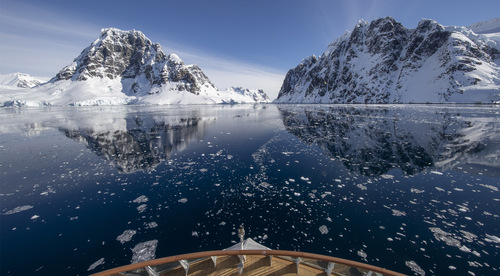
While Antarctica is often imagined as a flat, frozen expanse, parts of the Antarctic Peninsula and South Shetland Islands are defined by dramatic mountain ranges and glaciated terrain.
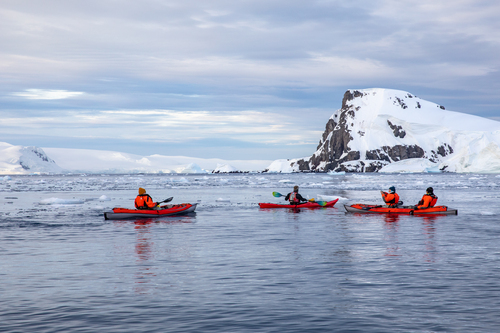
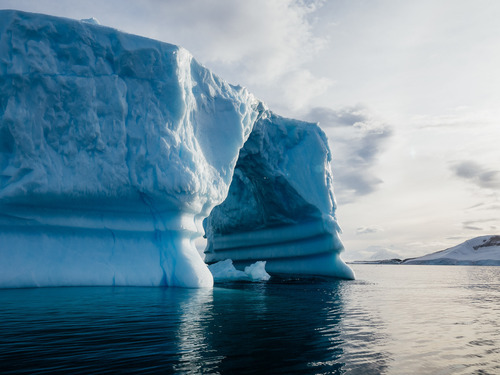
Towering peaks rise from the sea, glaciers spill toward the coastline, and countless slopes offer opportunities for guided ski and snowboard touring. Each ascent reveals expansive views across channels filled with icebergs, rugged islands and distant summits.
There are no ski resorts, no lifts and no marked runs — every descent is earned. Weather, snow conditions and safety considerations shape each outing, making every day on the continent different.


Guided, Small-Group Adventure
Aurora Expeditions’ ski and snowboard touring program is designed for confident skiers and snowboarders who are comfortable in variable snow conditions and have a good level of fitness.
Typical outings last between two and five hours and may involve climbs of up to 750 metres. Expeditioners also have the flexibility to rest or join other landing activities throughout the voyage.
Groups are kept small and led by internationally certified IFMGA mountain guides, supported by established safety systems and environmental protocols. Routes are carefully chosen to minimise environmental impact and avoid wildlife disturbance, ensuring the experience remains respectful of Antarctica’s fragile ecosystem.
Preparing for the Experience
Preparation for Antarctic ski touring is both physical and mental. Strong cardiovascular fitness, leg strength and endurance are important, as days can involve skinning uphill, carrying equipment and moving through deep snow.
Training activities such as hiking, cycling or stair climbing are ideal preparation in the months before travel.
Clothing requirements are similar to those used at ski destinations elsewhere in the world — a reliable layering system, protective outerwear, gloves, goggles and helmets. Flexibility and an open mindset are equally important, as Antarctic weather and ice conditions can change quickly.


A Typical Day on the Slopes
A ski touring day begins onboard with a briefing covering weather, terrain and safety plans. Expeditioners then travel ashore by Zodiac to a snow landing near a glacier.
From there, the group ascends using climbing skins before enjoying carefully selected descents through pristine terrain. When conditions allow, expeditioners may head ashore twice in a day, returning to the ship between outings to warm up, share stories and reflect on the experience.
More Than a Ski Trip
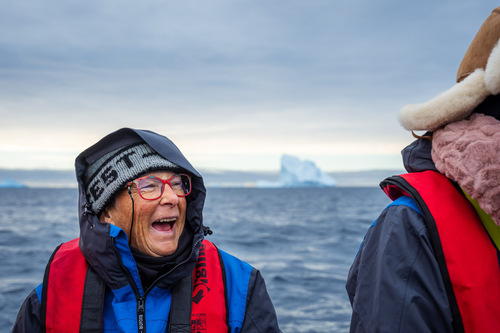
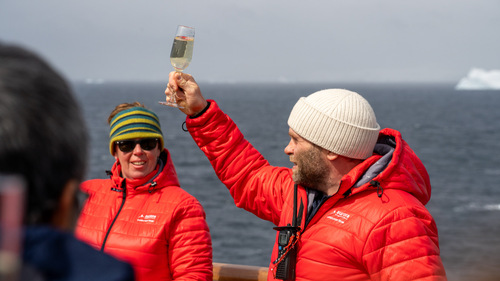
For many expeditioners, the impact of skiing in Antarctica goes beyond the activity itself. Over the course of the voyage, small groups often form strong bonds through shared adventure and teamwork.