There’s a quiet contradiction at the heart of loving wild places. To know them, you have to go there. To protect them, you have to be willing to change how you do it. That tension isn’t something you solve and move on from. It’s something you live with, and let it shape how you operate, year after year.
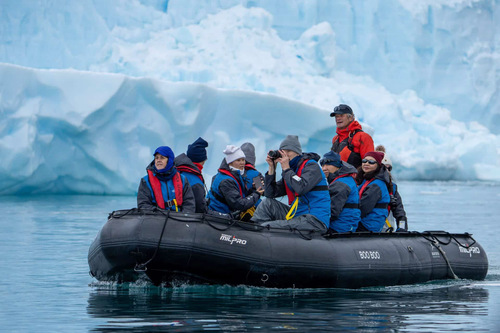
Aurora began in 1991, founded by Greg and Margaret Mortimer, whose approach to exploration was shaped by curiosity and a deep love for the wild. After Greg’s early expeditions to Antarctica, it became clear that these places had the power to shift how people saw the world, and their responsibility within it. The idea was simple: take small groups of people into extraordinary environments, travel with respect and let the magic of the place do the rest.

At the time, the polar regions were often seen as vast, remote and almost untouchable. That context no longer exists in the same way. Tourism has grown, the environments we visit are changing before our eyes and we now understand more clearly that absence alone does not protect places in an interconnected world. What happens in one region is felt far beyond it. The work, naturally, has had to evolve.
Passion and good intentions still matter, but they cannot stand on their own. Every expedition has an impact. What shapes the kind of impact you have is whether you are willing to let that reality challenge you, respond honestly to what it reveals and keep raising the bar, even when the next steps are not always obvious or comfortable.
As Aurora grew, it became clear that our founding values needed more than good intent behind them. As the business became more complex and the decisions we were making carried more weight, we needed something that could hold us to our own standards, not just when it felt easy, but when it really mattered.


Becoming a Certified B Corporation was one way of doing that.
B Corp sets a high, independently verified standard for social and environmental performance. It looks at how a business actually operates, not just what it aspires to achieve. It asks you to back up your claims with evidence, to look closely at impacts that are easy to overlook and to recognise that responsibility does not sit neatly within one team or initiative. It runs through the entire organisation.
The certification process took us about three years. It required us to take a close look at our systems, processes and policies across the business and to stay open to what that revealed. Some of it affirmed the direction we were already heading in. Some of it showed us where we still had work to do.
And it does not end once you are certified. Continuous improvement is built into the model. What was once considered best practice becomes the baseline. In 2025, B Lab introduced its most significant standards overhaul to date, shifting towards mandatory requirements across impact areas. In other words, the bar keeps moving up.


Within the B Corp community, there is a shared understanding that the challenges we face - climate change, biodiversity loss, pollution and growing social inequalities - are bigger than any one company. Progress comes from transparency, from sharing what we are learning and from being honest about what we have not solved yet.
That mindset shapes how we approach innovation and collaboration. Many of the biggest impacts in expedition travel are not always visible and they rarely come with ready-made solutions. They show up in the places we explore, in the air we move through and the water beneath us. So instead of waiting for perfect answers, we focus on testing, trialling and working with people who are willing to think differently.
It is a mindset that guides the partnerships we form, including our collaborations with CounterCurrent and Cleaner Seas.
CounterCurrent is tackling one of the toughest challenges in the maritime industry: decarbonisation. Using AI-supported modelling, validated by onboard weather sensors, their work on our ships helps vessels move more efficiently with ocean currents rather than against them.

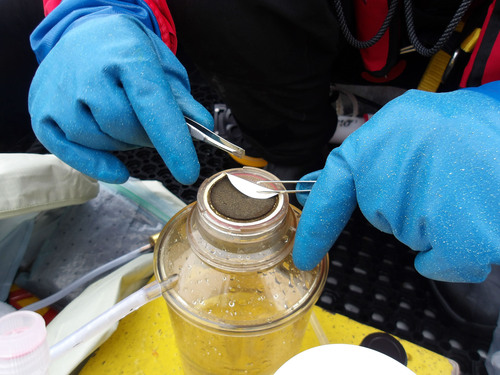
Cleaner Seas is tackling a different kind of challenge, one that is largely invisible but increasingly urgent. Their filtration technology supports us to capture microplastics before they enter the ocean, stopping pollution at the source.
Not every trial will succeed and not every solution will scale quickly. But progress comes from trying, learning and believing that travel, done thoughtfully, can help safeguard the places we have come to love.
After 35 years, that belief still holds. The work continues, the expectations keep rising and so does our commitment to meeting them.
And in a month that celebrates businesses striving to do better, it feels like a fitting reminder that the places that inspire people to explore are the same places that depend on us to protect and regenerate them.