 Call to book
Elephant seals are among the largest marine mammals, known for their impressive size, deep‑diving abilities, and striking differences between males and females. They spend most of their lives at sea, often diving thousands of feet in search of squid, fish, and other prey, and can hold their breath for over an hour. Despite their bulky appearance on land, they are graceful and powerful swimmers, roaming vast stretches of the Pacific Ocean during long migrations. Their distinctive large, inflatable noses—especially prominent in males—help amplify vocalizations used in communication and establishing dominance. These remarkable animals play an important role in marine ecosystems and continue to fascinate researchers for their extreme physiology and endurance.


Quick Elephant Seal Facts
| Scientific name | Mirounga angustirostris |
| Length | Males: up to 4-5m (13-16ft) Females: 3m (10ft) |
| Weight | Males: 2,300kg (5,000 lb) Females: 600-900kg (1,300-2,000lb) |
| Population | 230,000 - 250,000 individuals |
| Species Conservation Status | Least Concern |
Diet and Behaviour
Elephant seals are carnivorous marine mammals that spend most of their lives in the open ocean, where they feed primarily on squid and fish, with southern elephant seals occasionally taking rays and small sharks. They are exceptional deep divers, routinely descending hundreds of metres and sometimes more than 1,500 metres to find prey in dark, cold waters, using their sensitive whiskers and low-light vision to locate food. While at sea, elephant seals are largely solitary and follow a steady pattern of long dives lasting up to an hour, separated by very brief surface intervals, allowing them to remain underwater for up to 90% of their time. They are highly efficient swimmers, powered mainly by their hind flippers, yet appear slow and clumsy on land. When hauled out, they communicate using grunts and low-frequency vocalizations, with adult males producing especially loud calls, but overall their behaviour is strongly shaped by their remarkable adaptations for deep, long-duration diving.
Breeding Cycle
These seals have a highly seasonal breeding cycle that takes place on land, where large groups gather at traditional haul-out sites. During the breeding season, adult males arrive first and establish dominance through displays, vocalizations, and physical contests, while females arrive later and form groups on the beach. Mating occurs shortly after females give birth to a single pup that was conceived the previous year, meaning pregnancy includes a delayed implantation that allows timing to align with the breeding season. Females nurse their pups for a short but intense period, transferring large amounts of energy through rich milk, after which mating occurs and the adults soon return to sea. This tightly synchronized cycle allows elephant seals to balance the demands of reproduction with their long periods of feeding in the open ocean.

FAQs on Elephant Seals
Which is bigger, an elephant seal or a walrus?
The Southern Elephant Seal specifically is bigger than a walrus.
Whilst walruses look bulkier and have those impressive tusks, male elephant seals are significantly longer and heavier.
Adult male walruses are usually 3–3.6 m (10–12 ft) long and weigh up to 2,000 kg (4,400 lb) vs adult elephant seal males can reach 5–6 m (16–20 ft) in length and weigh up to 4,000 kg (8,800 lb).
Which animals eat elephant seals?
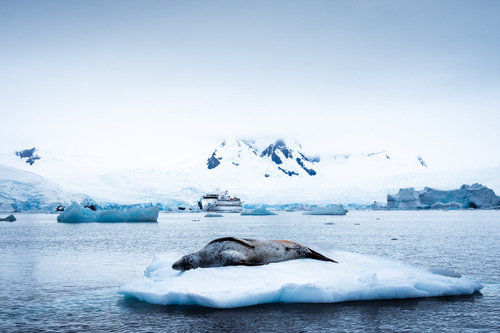
Great white sharks and Killer whales prey on elephant seals, however, Leopard seals are known to attack and kill stray or weaned pups.
What are elephant seals live expectancy?
Elephant seals can live to 20-22 years, sometimes even 30, with females generally outliving males (males up to 15 years), with about 50% of pups not surviving their first year.
Affecting factors: Extreme deep diving may take a physical toll, shortening lives compared to shallower-diving seals. Males also fast for long periods of time, this combined with their intense fighting shortens their lives.
Featured Antarctic Voyages