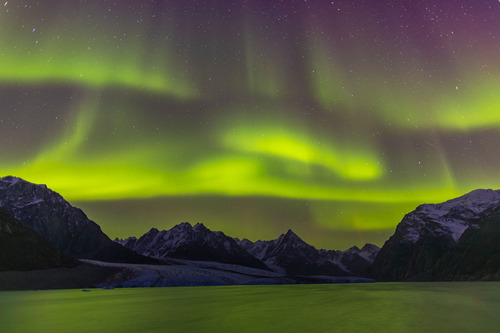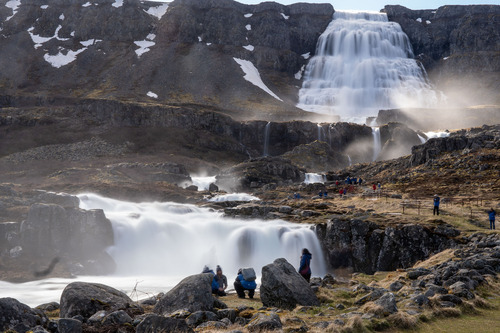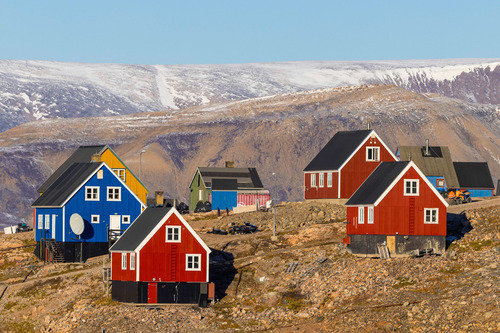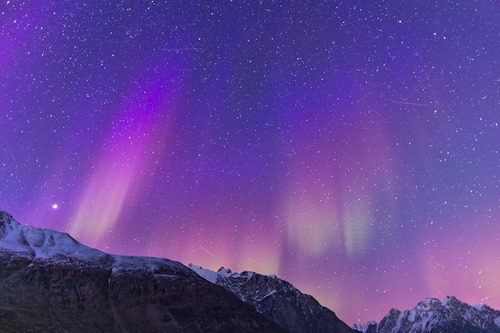
On 12 August 2026, the Moon will slide fully in front of the Sun, and for a few precious minutes the sky over the Arctic will go dark in the middle of the day. It's one of the most dramatic sights in nature — and for photographers, one of the most technically demanding.
Whether you're joining us for our Jewels of the Arctic: Greenland Solar Eclipse voyage or planning to photograph the eclipse from home, here's how to prepare your camera (and yourself) for totality — with tips gathered from the tools and resources our expedition photographers swear by.
Where to see it
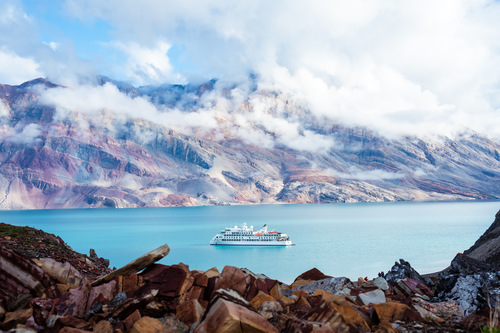
The 2026 total solar eclipse traces a path across the Arctic — through Greenland, Iceland and the far north of Spain — before continuing out to sea. Our Jewels of the Arctic: Greenland Solar Eclipse voyage sails from Oslo to Reykjavik aboard the Greg Mortimer, positioning guests to view totality from Scoresbysund, Greenland's vast fjord system, with East Greenland's iridescent icebergs as a backdrop. It's a rare opportunity to combine an Arctic expedition with one of the sky's great spectacles.

1. Choosing a solar filter for eclipse photography
Before we get to gear and settings: never point a camera, telescope, or your own eyes at the Sun without a certified solar filter. Ordinary lens filters, sunglasses, or eclipse glasses held over a lens are not enough — you need a solar eclipse filter certified to the ISO 12312-2 standard, fitted securely over the front of your lens. The only moment it's safe to remove the filter is during the brief window of full totality, when the Sun's disc is completely covered — and it needs to go straight back on the instant totality ends.
2. Plan your shot with PhotoPills
PhotoPills' Planner has a dedicated eclipse layer: select the 12 August 2026 eclipse from its calendar and it overlays the path of totality on a map, showing the Sun's exact position and timing from any pin you drop. It's the best way to avoid the classic eclipse-day mistake — framing a great shot only to find a ridge or mast in the way.
3. Get to know the sky with Stellarium
Stellarium is a free, richly detailed planetarium app that simulates exactly what the sky will look like from any location, at any time — including a full eclipse simulation. Use it in the weeks before departure to rehearse: set your date, time and coordinates, and watch the Sun and Moon move together in real time. It's a great way to build an intuitive feel for eclipse geometry — how the light changes, how quickly totality approaches — so nothing catches you off guard when the real thing unfolds.
4. Let Solar Eclipse Timer count you down
This is the app our expedition photographers won't shoot without. Solar Eclipse Timer calculates the precise contact times for your exact location, then talks you through the entire event with spoken countdowns — including reminders for when it's safe to remove your solar filter, and an unmistakable cue to put it straight back on as totality ends. Because it works entirely offline once set up, it's ideal for a ship in a remote fjord with no signal. For photographers juggling settings, framing and their own sense of wonder all at once, having the app announce each phase out loud means you can stay looking up instead of watching a clock.
5. Solar eclipse camera settings: gear and technique from AstroBackyard
For the technical side of photographing the solar eclipse, we lean on the guidance of astrophotographer Trevor Jones at AstroBackyard, whose eclipse photography guides are considered essential reading in the community. His core recommendations:
- Gear: a manual camera, a telephoto lens (300mm+), a sturdy tripod, and a remote shutter release.
- Filter on until totality: keep a certified solar filter on the front of your lens for every partial phase; remove it only during full totality.
- Focus manually: use Live View, zoom in on the Sun's edge or a sunspot, and fine-tune focus by hand.
- Start conservative, then bracket: roughly ISO 100–200, f/8–f/11, and 1/500s–1/1000s as a starting point, adjusted for your filter — then bracket above and below as light changes.
6. Don't forget to look up
It's worth saying: the best eclipse photograph is the one you actually got to watch happen. Totality lasts only a couple of minutes. Set your shot up, lock in your settings, and give yourself permission to take your eyes off the viewfinder — even for thirty seconds — to watch the corona flare around a jet-black disc, feel the temperature drop, and hear the sky go quiet. That's the moment people fly around the world to see.

Chasing the eclipse — and everything after it.
If capturing celestial and landscape photography from a small ship sounds like your kind of trip, our photography-focused Arctic voyages continue well beyond 2026 — including upcoming Jewels of the Arctic: Spitsbergen & East Greenland departures.
Got a question about eclipse photography before you set sail? Reach out to our Expedition Team.